
If you cook for your family every day, chances are you’ve used a nonstick pan — and at some point, you’ve probably wondered, “Is Teflon safe?” This post is for moms and families who want a clear, calm answer without fear-based headlines or confusing science. In this article, I’m sharing a real-life, experience-based look at Teflon and everyday cooking — what raised questions for me as a mom, what actually matters when it comes to safety, and how to make informed decisions for your kitchen without replacing everything overnight. My goal is to help you feel confident, informed, and empowered to choose what’s best for your family.

For most of my life before diving deep into healthy living, I didn’t think twice about the pans I cooked with. If it was nonstick, easy to clean, and worked for quick meals, it felt like a win — especially during busy seasons of life with kids, work, and very little time to overthink cookware. But at some point, I noticed something that made me pause.
One of my most-used pans was scratched. The surface wasn’t smooth anymore. And it made me wonder: Is Teflon actually safe for families — especially when we cook with it every day?
If you’ve had this thought too, you’re not alone. This is one of the most searched kitchen questions online, and for good reason. Let’s talk about it calmly, honestly, and from real-life experience — not fear or hype.
What Is Teflon, Exactly?
Teflon is a brand name for a nonstick coating that has been widely used in cookware for decades. Most families have owned at least one Teflon-coated pan at some point — usually because it makes cooking and cleanup easier.
For everyday home cooking, Teflon became popular because:
- Food doesn’t stick easily
- Less oil is needed
- Cleanup is fast
For busy moms, that convenience matters. But safety depends on how the pan is used and its condition, which is where the conversation gets more nuanced.
Why So Many Moms Are Asking If Teflon Is Safe
In theory, modern Teflon cookware is designed to be safe when used properly. But real life doesn’t always look like “proper use.” Here’s what raised questions for me:
- Scratches from normal use
- Pans that had been used for years
- High-heat cooking during rushed dinners
- Kids eating food cooked in the same pan every day
- The concern for many families isn’t one single use — it’s daily, long-term exposure.
And as a mom, that’s where I started paying attention.
What Happens When Teflon Cookware Gets Scratched?
This is where most moms start to feel uneasy — and understandably so. Over time, Teflon pans can:
- Scratch from metal utensils
- Wear down from regular use
- Lose their smooth coating
When a pan is visibly scratched or peeling, it’s usually a sign that it’s time to stop using it, since toxic chemicals may leak through.
That moment — standing in your kitchen holding a pan you’ve cooked with for years — is often what leads people to start asking better questions. That’s exactly what happened to me.

Is Teflon Safe for Everyday Cooking?
Here’s the honest answer most families need:
👉 Teflon cookware can be safe when it’s new, used correctly, and not overheated.
👉 Worn, scratched, or overheated pans are where concerns come in. When heated too high, the pans releases various gases and chemicals that present mild to severe toxicity. A well-known toxic environmental pollutant PFOA is also used in the synthesis of PTFA and both can be released in foods when the pan is heated to high or scratched.
For me, the question wasn’t: “Is Teflon safe in perfect conditions?” It was: “Is this the best option for how my family actually cooks?”
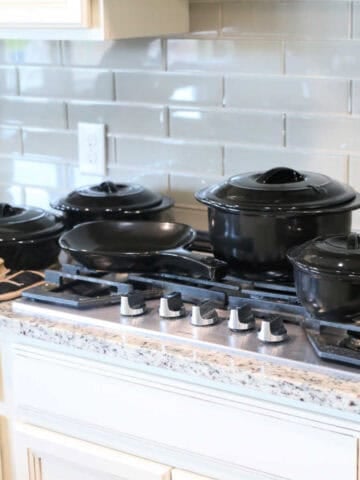
Busy mornings, quick dinners, distracted cooking — real life. That’s when I decided to reassess what I was using most often and start using non toxic cookware (currently loving pure ceramic pans) instead of coated pans.
What I Did Instead (Without Replacing Everything)
I didn’t throw away my entire kitchen - at first. I didn’t panic. I simply started with what we used every day.
Here’s what helped:
- Replacing one heavily used pan at a time with non-toxic pans
- Paying attention to pan condition
- Choosing durability over convenience
- Being realistic about how often we cook at high heat
This approach felt manageable — not overwhelming. If you focus on that, it makes it manageable for you too.
Why Moms Often Start Rethinking Nonstick Cookware
For many families, the shift doesn’t come from fear. It comes from:
- Wanting long-lasting tools
- Reducing daily exposure where possible
- Making thoughtful upgrades over time
- Creating a kitchen that supports long-term health
It’s the same reason many moms start reading ingredient labels or simplifying meals — not perfection, just awareness.
Should Families Stop Using Teflon Completely?
I say yes. Avoid it as much as possible.
Gradually switch to alternative materials, and aim to focus on cookware that lasts decades. You can turn stainless steel pans into safe non-toxic non-stick pans by heating them on high heat for two minutes, then adding oil and turning down the heat to low. Let the oil heat for about 30 seconds then add your food. I do this for eggs and pancakes and they pop off the pan perfectly! If you are on the fence on making the switch, check out this article, "Is non-toxic cookware worth it".
How to Decide What’s Right for Your Family
Ask yourself:
- Is my pan scratched or worn?
- Do I cook at high heat often?
- How old is this cookware?
- Is convenience or durability more important to me right now?
There’s no “perfect” answer — just an intentional one.
Final Thoughts: A Calm, Realistic Perspective for Moms
As moms, we make thousands of small decisions every day. Cookware is just one of them. You don’t need to be afraid of your kitchen. You don’t need to replace everything overnight. And you don’t need to live in constant worry.
Sometimes the most helpful step is simply asking better questions — and making gradual changes that support your family over time. That’s what I aim for in my own home.
More on Mindful Living




Recipes you may enjoy
Follow along with me on Instagram, Pinterest, Facebook, YouTube and Twitter for a feature and more healthy lifestyle and recipe inspiration! And don't forget to leave a comment below.



Leave a Reply